Flat Roof Replacement Underway in Brookhaven
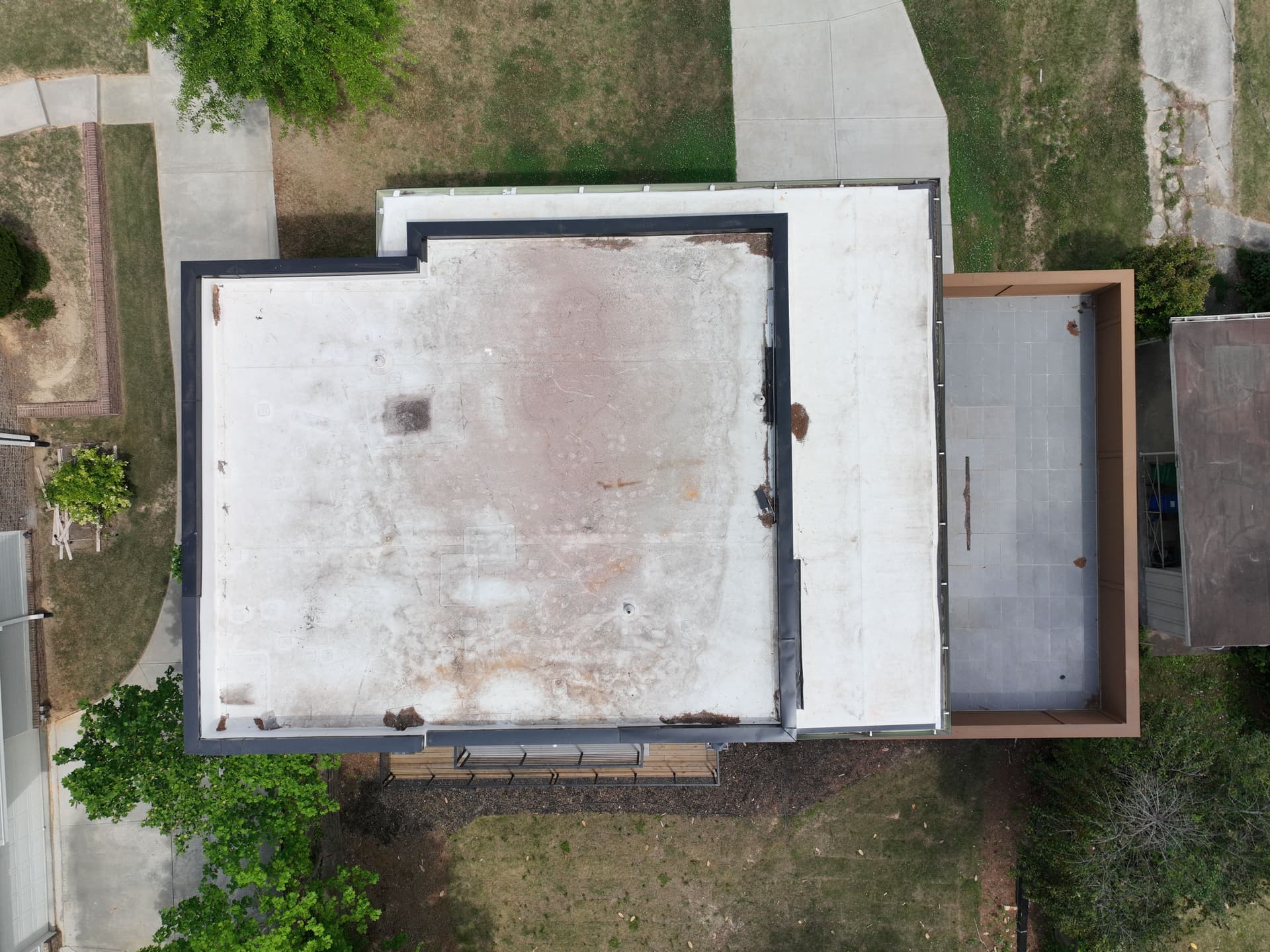
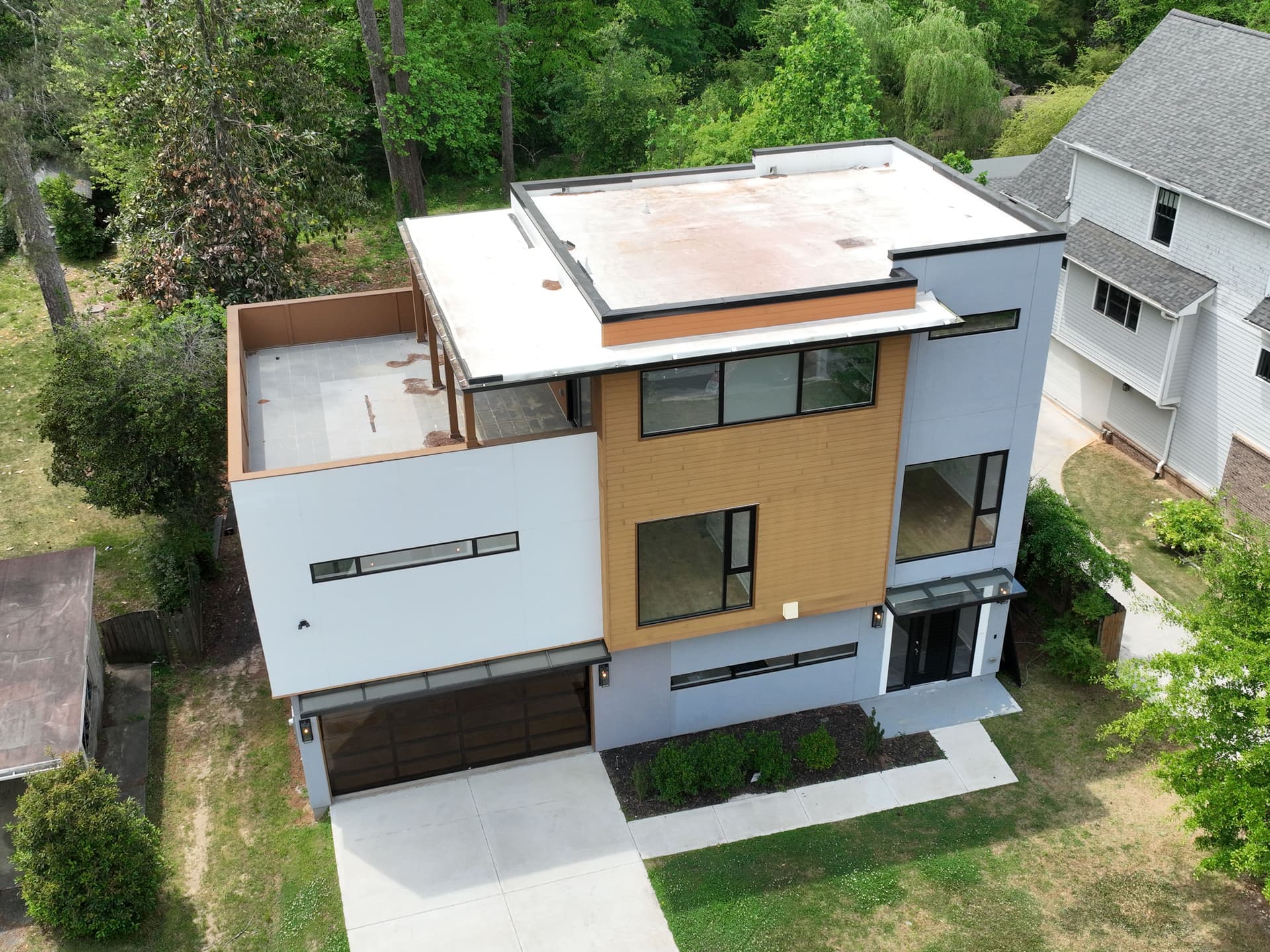
This Brookhaven home has a sharp modern design - clean lines, big windows, wood accents. But the flat roof? It's been telling a different story. Staining, discoloration, and visible wear across the membrane surface are exactly the kinds of signs that tell us a roof has reached the end of its useful life.
That's where we come in. We're prepping this home for a full flat roof replacement using a TPO membrane system. TPO - thermoplastic polyolefin - is one of the best choices for flat roofs right now. It's highly reflective, which helps keep cooling costs down during hot Georgia summers. It's also durable, flexible, and built to handle the kind of heat and UV exposure we see here in the Atlanta area.
Flat roofs don't fail overnight. They deteriorate gradually - and that's actually the tricky part. Because the slope is minimal, water doesn't shed the way it does on a pitched roof. It sits. It seeps. It finds the weak spots. By the time you notice a problem inside the house, the damage has usually been building for a while.
Getting ahead of that is the whole point. A proper roof inspection is what catches the early warning signs before they turn into ceiling damage, mold, or structural issues. For a home like this one - with multiple flat roof sections at different levels - that kind of proactive approach makes a real difference in protecting the investment.
TPO systems, when installed correctly, are built to last. The key word there is correctly. Seams, flashings, edge details - those are where flat roofs fail when the workmanship isn't right. We take each of those details seriously, because that's what actually determines how long the roof performs.