Commercial Flat Roof TPO Installation in Atlanta
Flat roofs don't forgive sloppy work. When something goes wrong up there - whether it's a bad seam, a poorly flashed penetration, or a membrane that wasn't properly secured - you're looking at water intrusion, insulation damage, and repair bills that add up fast. That's exactly why the installation process matters so much.
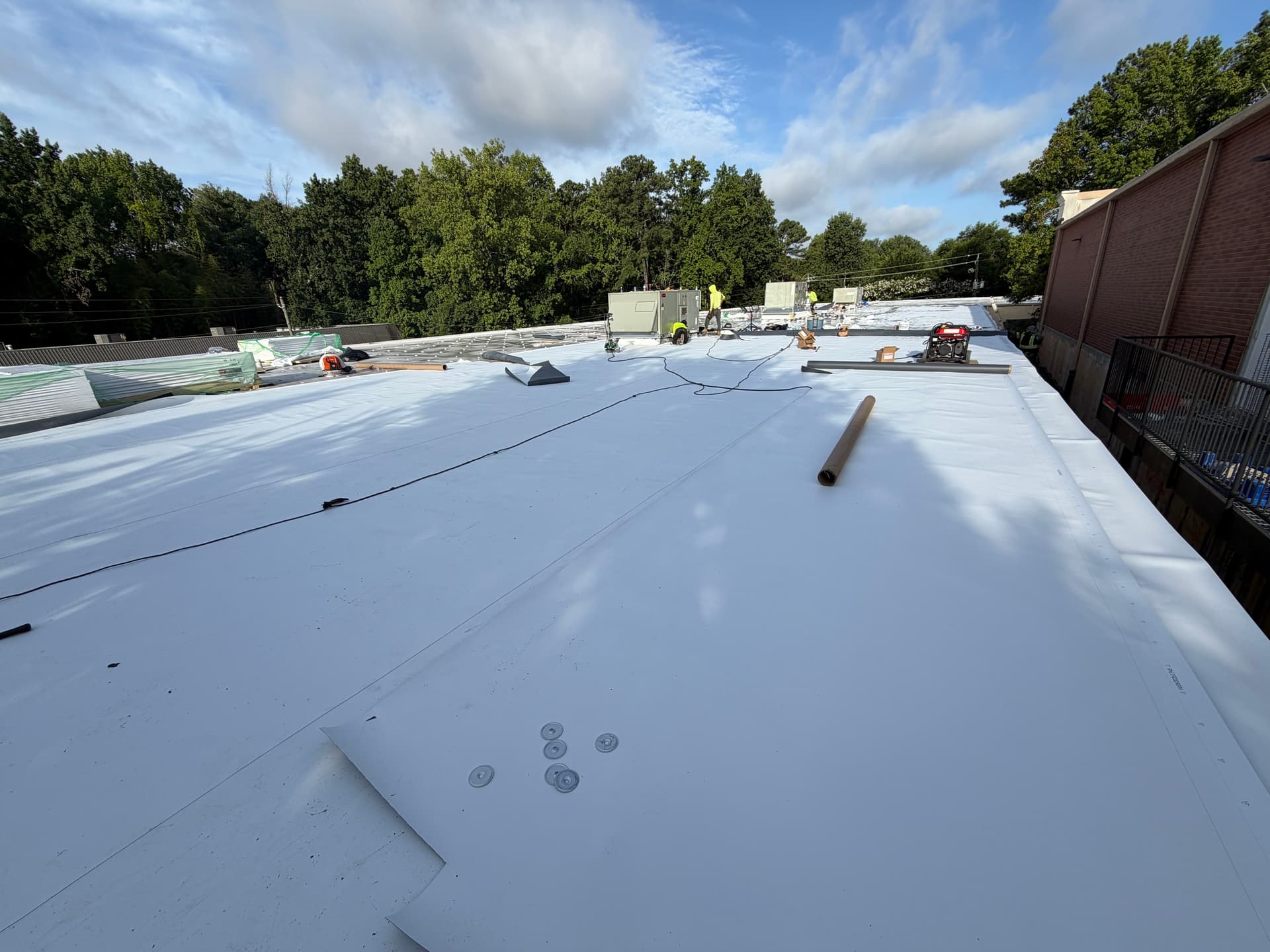
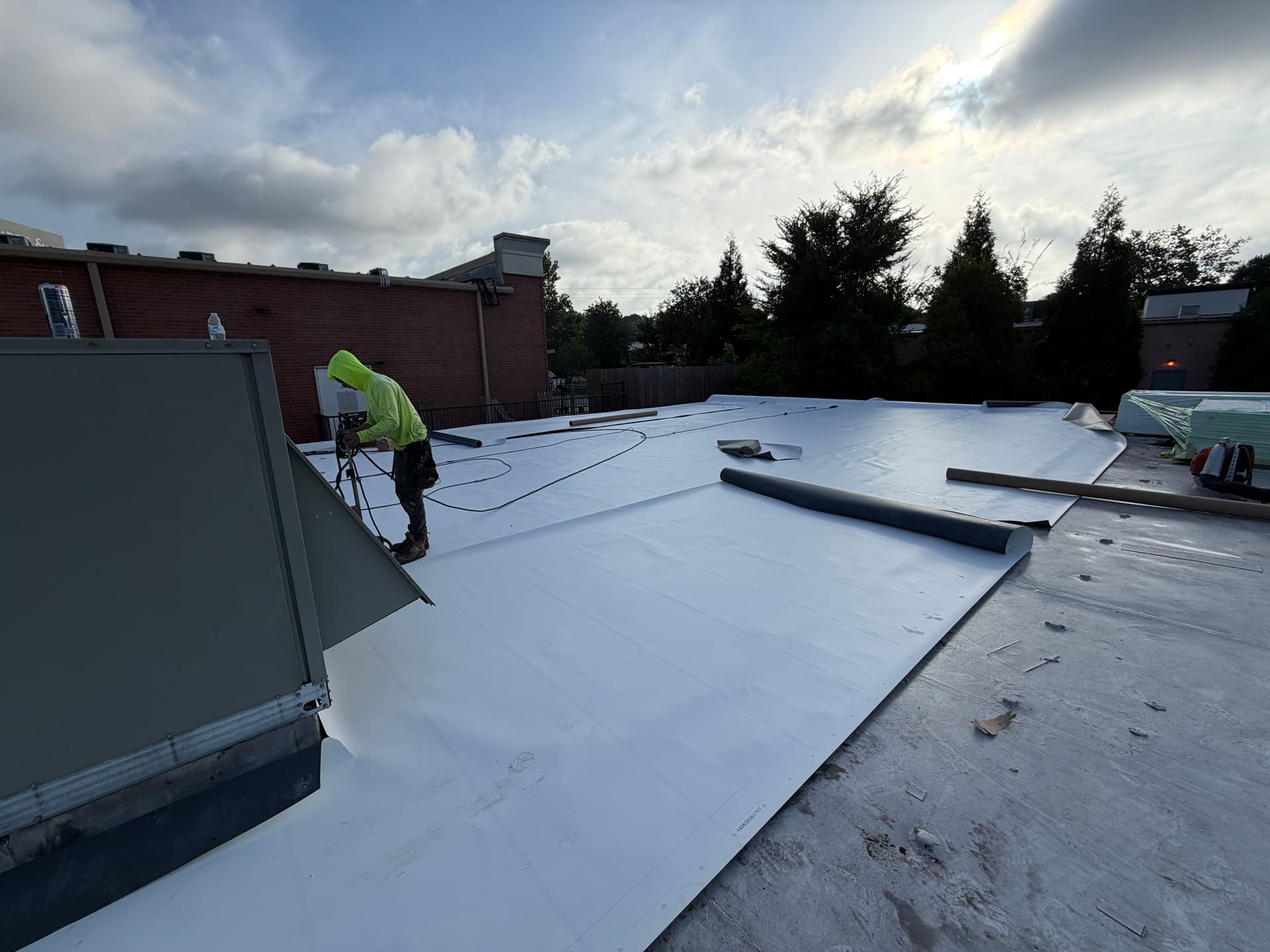
Here's what we're working with on this Atlanta commercial job. A large flat roof getting a full TPO membrane installation. TPO - thermoplastic polyolefin - is one of the most widely used commercial roofing materials for good reason. It's tough, it reflects heat instead of absorbing it, and when installed correctly, it holds up against the kind of weather Georgia throws at it year-round.
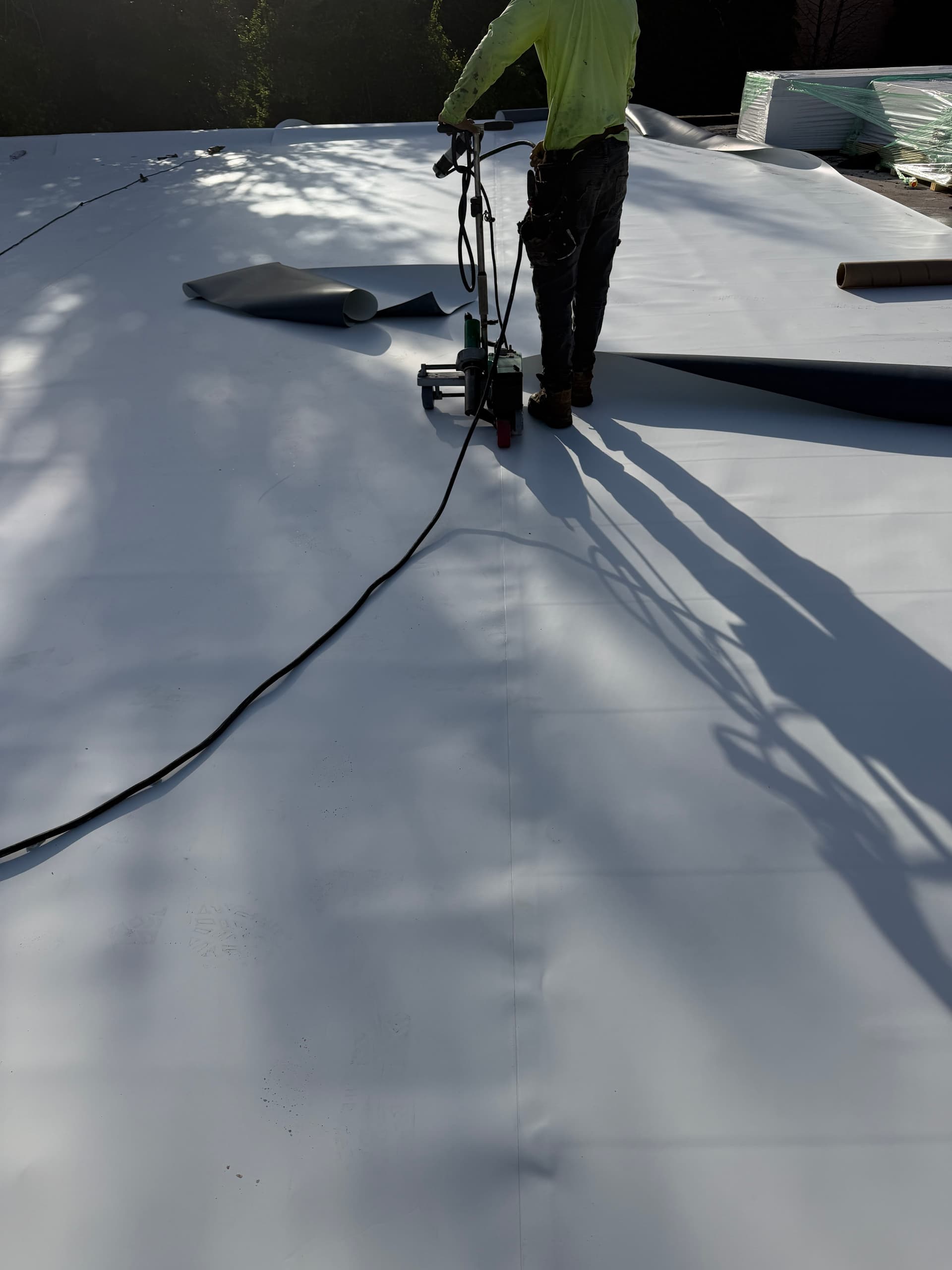
The key word there is 'correctly.' You can see the hot-air welding machine our crew is using to fuse the membrane seams together. That's not a step you can rush or cut corners on. The welds have to be consistent and tight across every single seam, because that's where failures typically happen on a flat roof. We run that welder carefully and methodically - no gaps, no cold welds.
We also work around the rooftop HVAC units and other penetrations with the same level of care. Those spots are where water finds its way in if the flashing and membrane terminations aren't done right. Getting those details locked in tight is a big part of what separates a roof that lasts from one that causes headaches two years down the road.
TPO roofing is a serious investment for any commercial property owner, and it should perform for the long haul. That's the standard we hold ourselves to on every job - not just getting it done, but getting it done right so you don't have to think about that roof again for a very long time.